Media AdvisoryWednesday, May 14, 2025
Using artificial intelligence, scientists characterized tissue samples from more than 9,000 women.
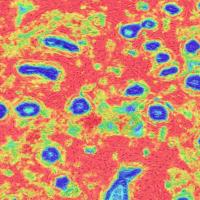
Researchers at the National Institutes of Health (NIH) have identified a series of changes in the architecture and cell composition of connective tissues of the breast, known as stromal tissue, that is associated with an increased risk of developing aggressive breast cancer among women with benign breast disease, and poorer rates of survival among women with invasive breast cancer. This process, which they call stromal disruption, could potentially be used as a biomarker to identify women with benign breast disease who are at high risk of developing aggressive breast cancers, as well as those with breast cancer who may be at increased risk of recurrence or death.
Such insights could help inform the development of cancer prevention and treatment strategies that target the stromal microenvironment. In addition, stromal disruption is inexpensive to assess and could be widely adopted, particularly in low-resource settings where molecular analysis is impractical or very expensive.
In the study, the researchers used machine learning to detect subtle changes in the stroma of 4,023 donated samples of healthy breast tissue, 974 biopsies of tissue with benign breast disease, and 4,223 biopsies of tissue with invasive breast cancer.
The researchers noted that factors such as chronic inflammation and wound healing play a role in stromal disruption. They emphasized the need for additional studies to determine whether strategies to prevent these tissue changes from occurring, such as lifestyle changes and anti-inflammatory medications, might be beneficial to reduce aggressive breast cancer risk, particularly among high-risk women.
Mustapha Abubakar, M.D., Ph.D., Division of Cancer Epidemiology and Genetics, National Cancer Institute
“Unraveling the role of stromal disruption in aggressive breast cancer etiology and outcomes” appears May 14, 2025, in the Journal of the National Cancer Institute.
About the National Cancer Institute (NCI):NCI leads the National Cancer Program and NIH’s efforts to dramatically reduce the prevalence of cancer and improve the lives of people with cancer. NCI supports a wide range of cancer research and training extramurally through grants and contracts. NCI’s intramural research program conducts innovative, transdisciplinary basic, translational, clinical, and epidemiological research on the causes of cancer, avenues for prevention, risk prediction, early detection, and treatment, including research at the NIH Clinical Center—the world’s largest research hospital. Learn more about the intramural research done in NCI’sDivision of Cancer Epidemiology and Genetics(link is external). For more information about cancer, please visit the NCI website atcancer.gov(link is external)or call NCI’s contact center at 1-800-4-CANCER (1-800-422-6237).
NIH…Turning Discovery Into Health®
National Cancer Institute (NCI)(link is external)
NIH Press Office(link sends email)